Sunday, 19 May 2019

Scotland Days 2 and 3.

Saturday 27th May

Al and Dan broke themselves in the pub so never made it, and Andy opted for a lie in after a week of daft ‘o clock starts wit work, so Jono and I spent a few hours at dawn wandering the tracks of Anagach Forest. Beautiful but relatively birdless aside from a couple of singing male Redstarts and common woodland birds. Very lovely though, and a couple of Red Squirrels and several Brown Hares were nice to see; it always surprises me to see the latter species in the woods.

Anagach at dawn, always magically ancient


We then spent a couple of hours searching for crossbills at Carr Wood then also at Forest Lodge, although the weather deteriorated in the afternoon. Dan and Andy had now joined us, but Al wasn’t going to make it given his heroic attempt at alcoholic annihilation last night. We found quite a few Crossbill sp., both ‘normal billed’ and larger billed birds but nothing that was a clear cut Parrot. The larger billed birds called deeper to my ear and in the past we would have been satisfied they were Scottish Crossbills but these days who knows! No sound recording = no clear ID.

Any crossbill in Scotland is a Scottish Crossbill, isn't it?
An hour or so eagle searching was called off as the weather still wouldn’t play ball, but a male Wheatear next to the car kept me entertained and my first Cuckoo of the year sat on wires was nice to see, especially given their rarity at home now.

We returned to the house, ate chippy  and sat down. None of us head any real enthusiasm for an evening in a wildlife hide but we went anyway as Andy had pulled in a favour. Woodcocks displayed as we walked from the car to the somewhat dudey structure. But it was worth it when a female Pine Marten quickly appeared, only my second ever. Three Badgers also put in a show too. Great stuff.


Sunday 28th May

Another early one with Al. Good flight views of a male Capercaillie but still no views on the ground.

Caper evidence
We returned to the house, packed and headed to Cairngorm. The fenicular no longer works, a complete waste of money, but at least it keeps the numbers of people down. Dan headed off. The weather was good and so we walked about half way up, or three of us did as Jono had a change of heart midway up. Several Ring ouzels showed well, and a single Mountain Hare, but we failed to find and Ptarmigan despite hearing one. It didn’t help that news of a Rock Bunting on Scilly came through, somewhat distracting us. Thankfully that was quickly established as an escapee, but we headed down anyway as we had a long drive ahead.


Next stop was Killiecrankie, where two Wood Warblers trilled away. These are ace birds, but yet another bird that’s suffered massive declines so I rarely see. We left Andy and Al there and began our journey south, stopping at Musselburgh Lagoons so Jono could try for a tick.

The long staying male American White-winged Scoter was on show immediately thanks to a couple of birders, and after a while came in pretty close and showed well amongst a couple of hundred Velvet Scoter. Two male and a female Surf Scoter also showed reasonably and a single Common Scoter was present, along with a few Long-tailed ducks and Eiders.
 
American winger, by Andy butler
And that was that, a most excellent if somewhat hectic weekend. Next time maybe a more leisurely pace. Yeah right...

Sunday, 12 May 2019

Scotland Weekend, April 2019 - Day One

In 2015 Al Orton and I made the trip north for a Scotland weekend based largely around the over-wintering Harlequin on the River Don in Aberdeen. We also caught up with the Ythan drake King Eider and made a quick raid to Speyside (of which the highlight was an unexpected close, if brief, encounter with a male Capercaillie on the trail). Despite seeing some good birds, it was too brief a visit. I really should go for a week sometime.

So when Al suggested a trip up again for a long weekend it seemed like a good idea and plans were hatched. Andy C, Jono and latterly Dan Pointon were recruited and Andy kindly sorted logistics.

Jono travelled over from France in the evening of 25th, so as I had to wait for his late arrival I decided to spend the late afternoon in the company of three Dotteral on the Great Orme. I hadn’t seen a Pringle bird for some years and knew we were too early to see them on the Cairngorms spit seemed a perfect opportunity to reacquaint with these wonderful birds. There were two males and a female, and as ever they were marvellously tame on their temporary passage habitat. Choughs and Ravens flew around as I watched and a quick look offshore revealed a few Guillemots, Razorbills  and Shags. Heading back to Manchester airport I collected Mssr Williams and I made the long overnight drive to Speyside to meet up with the others at dawn on Friday 26th. It was an uneventful journey and I grabbed some sleep as Jono dodged Red Deer along the A9.


We met with the others at Feshiebridge as the sun rose, then wandered along the forest tracks against a backdrop of singing Tree Pipits and Common Crossbills. In no time at all, a male Capercaillie flushed from a tree and back in our direction, giving a good flypast view. Excellent!

Heading off for breakfast, we stopped for a few minutes at Loch Insh where an Osprey pair were around their island nest, 6 Whooper Swans were on the loch along with Goosander and Goldeneyes.

Beautiful Loch Insh
 Refuelled and caffeinated, we dropped bags at our Aviemore digs then next stop was nearby Avielochan where the pair of Slavonian Grebes showed remarkably well before an unsuccessful eagle watch was hampered by the weather, although we did add Dipper to the list along the route. Lochindorb was next, but the hoped for breeding plumage Black-throated Divers were disappointingly distant. Displaying Common Sandpipers and a tame male Red Grouse were the only other birds of note.


Heading north we made a few roadside stops, with the highlight  being a Common Gull colony, although they are really lovely birds and I enjoyed watching them for a while.

 
Heading north to the coast we had a look for the famously distant Nairn King Eider to no avail, but there were good numbers of Long-tailed Ducks and Eiders as compensation. A couple of hundred Sandwich Terns were around and offshore Gannets, Fulmars and Kittiwakes all notched, along with a few Bar-tailed Godwits. The highlight here, though, was a female and calf Bottlenose Dolphin which showed well and close from the harbour wall.

Heading further east to Burghead (site of the famous 1994 Grey-tailed Tattler - my last visit here!), Andy quickly picked up an immaculate breeding plumage White-billed Diver. It was mid-range but gave decent views in excellent light and calm conditions - what a bird! A much closer breeding plumage Red-throated Diver was present along with small numbers of auks, as expected, but a female Marsh Harrier coming in off the sea was a real surprise. Andy excelled himself again by picking up a second WBD a little further along the coast and worthy of a drive around in the hope it was close - and it was!! This one was also immaculately plumaged and it gave stunning views at perhaps 250-300m, even down to the red eye. What a bird and something I'd always wanted to see. An equally immaculate Black-throated diver was also present, along with the usual eiders, auks and long-tailed ducks, and a Harbour Porpoise passed by. Onshore several Barn Swallows passed through, a pair or Bullfinches sat nicely and Yellowhammers rattled away in the sunshine.

 
Heading back west, nearby Roseisle Woodland quickly provided us with an easy Crested Tit, before we had another bash for the Nairn King Eider without success. Time to head back for a beer and a curry, stopping only for a chance encounter with 3 male Black Grouse in a roadside field.

 
Some day. Beers and curry in the pub. Sleep.
 

Monday, 6 May 2019

Early Spring in the Welsh Uplands

Two trips, 22nd and 25th March, to the Clwyd Mountains. Highlights were good views of Goshawk at Clocaenog, with at least 4 birds showing including a perched and vocal male. The World’s End Black Grouse as ever didn’t disappoint and there were plenty of Red Grouse around too. The Great Grey Shrike showed quite well at Lynn  Brenig, as did the long staying drake Ring-necked Duck on nearby Lynn Bran reservoir. Best of all, though, were the Adders, with 5 of these beauties basking along an embankment - only the second time I’ve ever seen one.


Tuesday, 26 February 2019

TENGMALM'S OWL - 'nuff said.

Ok so us twitcher types can be prone to exaggerating how amazing some of our precious rare birds are. Or how rare each one is. Or how it is our 'dream bird'. Or how we missed the one 20 years ago and this is the only chance of  our lifetime. And we absolutely mean it, every word of it. This stuff is important to us. We are undoubtedly OCD on rare birds, we just can't help it. We get emotional and excited, child-like and sometime childish about seeing these things. We breath this stuff, despite it's bizarre pointlessness.  

Every so often something appears that utterly halts you in your tracks. A heart stopping moment when you first cast eyes on the news. Usually these are birds of myth and legend, faint whispers of the past. Birds that would never come again, or even if they did would never be accessible. Dream birds.

Tengmalm's owl is very much one of those birds, so when Andy C sent me a Whatsapp message from the Shetland group with news of one present in a garden on Mainland Shetland I had to read it several times. In some ways it should have been expected - there had been a one day bird on the small island of Copinsay (Orkney) last autumn, but that was consigned to join the other mythical records. Higher than usual numbers had been seen on the Scandinavian coast last autumn too, so again perhaps we should have expected more, but we've been there before and big numbers across the North Sea have failed to deliver UK records in recent years. Regardless of all of that I still wasn't prepared. This was big, and of course the twitching fraternity went into immediate meltdown.

So why is this species so mythical? The short version is that there has never been a twitchable one. Not a single bird. There should have been in 1983 (before my time), when one spent 3 weeks at Spurn in Yorkshire, but news was suppressed at the time leading to bitter repercussions locally that still linger to this day. Since then there has only been an inaccessible bird on Orkney (in May 1986) and last autumn's brief bird (which was photographed on a toilet by a non-birder!). No twitcher has seen a UK Tengmalm's. Ever.

Not only that, it's an owl. Everyone loves an owl. In fact if you had asked me and most other birders what their personal 'holy trinity' of most wanted birds would be, nearly everyone would include both Tengmalm's and Hawk Owls (with the third probably Wallcreeper now). It was never a question of whether I would go, it was simply about how I got there and when.

There's nothing like a local same day twitch!
It was a Tuesday (19th February) and mid morning when the news came through. I was at my desk in the office as usual. Same day wasn't going to happen. The following day was obviously preferable, but like an amateur I spent too long looking at return options on schedule flights being keen to get back to work and for the kids. The Wednesday option evaporated and it looked like I would have to drive to Aberdeen for the Wednesday evening ferry, assuming the bird was still present. It wasn't, news in the morning was negative, although the Shetland weather was fowl and so no one really thought it had gone far given the time of year. With it possibly moving roosts each day this bird had the potential to be a nightmare to twitch.

On Thursday 21st (hereafter Tegmalm's Day for all eternity!), news came through at 7am that the bird had been watched hunting from fence-posts by the original garden at dawn. Holy shit, I hadn't expected that to happen. Twitch on. Cutting a long story short, our cunning contingency plan came together perfectly. Along with Phil Woollen, Andy Clifton, Matt Mulvey and Malcolm Goodman, I was on Shetland by 1.30, arriving at the Bixter garden by 2.30 and straight onto to the roosting owl. Modern day twitching, eh?

Words I never thought I'd say - "TENGMALM'S OWL OML!"

The all important first glimpse.
Before it seemed to shuffle behind the trunk

Happy birders savouring the views (below)
After bounding out from it's roost it posed beautifully. Just superb.


Before flying right past us and landing on a fence post (Phil Woollen's photo).


But it got even better. As a finale it perched on top of a spruce tree for a few minutes, allowing us to savour every detail. Absolute dream stuff!! (Matt Mulvey's shots)

Initial views were actually pretty good, with the bird occasionally waking to preen and look around, but always at partially obscured. We had to stay overnight anyway, so it made sense to wait about until dusk to see if it would perform. Somehow the views had deteriorated without the bird appearing to move over the course of the afternoon, but at 5.20 it was wide awake and getting active. Suddenly, as I watched it through a scope, it bounded out of the tree straight towards us and sat there in the open for the next 15 minutes at just about 15m range. Incredible, but it wasn't done. It then flew right past us (undulating like a Little Owl) and landed on a fence post in full view for a couple of minutes, before finally flying up on top of a spruce as a finale. At around 6.45 is dropped out of view in the gloom, although I think even that was illuminated by the beaming smiles of the twenty or so birders present. Perfect views. How lucky were we, especially as it disappeared again the next day and some people dipped more than once. It's still there as I write this (26th Feb).

Straight up there into the top few birds I've ever seen. It's hard to express how good this bird was, but it made me think of Richard Millington's 'hyper-zonky mega crippler' from his old Birders Diary book. Although that is still insufficient. Deep deep joy at this one.

We overnighted in an Airb'n'b and savoured a Thai curry with a few celebratory beers. Next morning it was time to head back to the airport, stopping en route at the Shetland catch in Lerwick for a quick duo of an adult Glaucous Gull and a 1st w Iceland Gull, along with Kittiwakes, Black Guillemots and Eiders. Then south to Loch Spiggie where the long staying Pied-billed Grebe showed distantly. No time for much else aside from the obligatory Hooded Crows, Rock Doves and 'proper' Greylag Geese before heading home. Back in time to get the kids and enjoy a normal Friday evening with them.

Some twitch. In fact as I write this days later I'm still buzzing. This really was the stuff of legend, and if I'm honest a much needed boost in what has been a dark period personally. Perhaps there is such a thing as fate.

And because it's so good, here are a few photos from the following days, none of which are mine.


Jonny Mac

Hugh Harrop
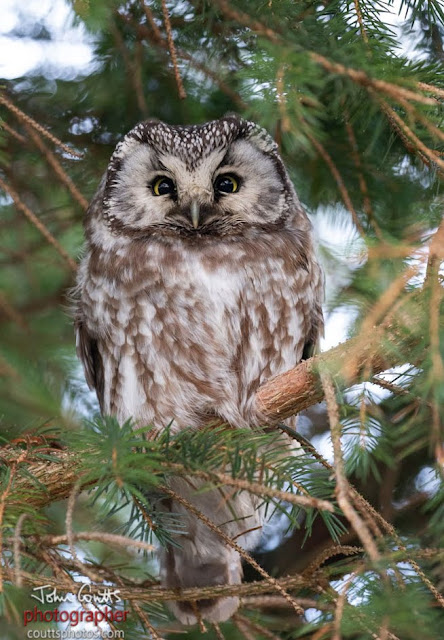
John Coutts
  

Monday, 25 February 2019

2019, a new dawn.

January

So on a personal note the latter part of 2018 was traumatic and I'm glad it's over. There's a long way to go to heal and some unpleasant times ahead still, but at least I could be glad that year is over and start to look forward.

With my new life means new pressures on time and, at the minute at least, little enthusiasm for birding alone.  I did manage to call in to the patch on 1st and saw the Bittern, plus Goosander and a flock of 150 Pink-footed Geese over.

With Andy and Jono over in early Jan it was good to get out for a jaunt around Cheshire on the 3rd in what turned out to be my only proper birding of the month.

Highlights were the four European White-fronted Geese at Frodsham, along with a Great Egret and a couple of Pink-footed Geese out on the Score. We then moved to BMW, which as ever was awash with common birds including a Cheshire tick for me - Bearded Tit. Other birds of note included Marsh Harrier and Cetti's Warbler, along with distant Whooper Swans. Out on the Dee saltmarsh we managed a nice Short-eared Owl, Peregrine and numerous Little Egrets before heading back to the patch for more Bittern action. Not a bad day by local standards.


European White-Fronted Geese, Frodsham. Only the third time I've seen this species in Cheshire.
 
On 14th January I was working in Lancashire so had a quick look for Bewick's Swans amongst the 150 Whooper swans - no joy but lovely to watch the latter at close range.


Whooper Swans.

On 21st I popped out of work to see two Waxwings at the (incredibly) regular spot in Warrington. the birds were easy enough to find and see, which was a good job as I'd forgotten my bins!

And that was about it for the month!

Wednesday, 12 December 2018

Re-tern Opportunity (sorry)

11th December 2018

Autumn was ling since over and I've recently had far more pressing issues to deal with than birding, so I personally was fairly happy that there would be nothing to chase for the rest of 2018. However, birding being as it is, that didn't happen. Thankfully this one was about as easy as it gets.
 
News of an orange billed tern on Anglesey on Monday 10th immediately seemed likely to be the not unanticipated appearance of the Guernsey then Sussex Royal Tern. Perhaps I was being over hopeful, but after the dip disaster of summer it would be nice for that to be the case. Within the hour the identification was confirmed, along with the presence of a metal ring on the bird's right leg, precisely as the Guernsey bird. A chance to rapidly ease the pain, and not too far from home either. Twitch on tomorrow, happy days. Arrangements for a dawn raid then a return to work were made, then rapidly unmade as I realised I had to wait in for deliveries. Flip.
 
In the end I needn't have worried. I was on the road by 9.15, arriving at Traeth Lligwy beach around 11. The bird had been seen earlier and most folk had already departed, but it had then disappeared north along the coast about 45 minutes ago. I set up my scope and immediately latched onto a very distant large tern heading towards us, clearly the American Royal Tern. After putting everyone onto it, we watched as it flew steadily towards us, pausing to fish a couple of times, before landing on the sand bar just in front of us. Awesome. Unfortunately it didn't linger and immediately flew, lingering to forage in front of us for the next 10 minutes or so before disappearing round the headland towards Moelfre. I decided to stay around in the hope it would reappear and land long enough to photograph, but it wasn't to be. When it did reappear it again continued to forage, then appeared to head into the nearby Traeth Dulas estuary. In the hope it would settle there I sped around just in time - the bird gave stunning flight views as it cruised up the estuary and practically over the heads of me and the one other observer present. If only I was an actual photographer! I played cat and mouse with it for the rest of the day, but never managed prolonged or close views of it sat. 

Still it was a splendid beast. All terns are superb, but the orange billed types are just crippling and this species has that added sentimental value of a Cape May connection.

From a pure listing perspective this was really an insurance bird for now. Unlike many, I was fortunate to see the June 2009 Royal Tern at Black Rock Sands, just across the Menai Straights (my 500th UK species at the time). However nothing is ever constant and it transpires that Royal Tern is currently a recommended ICO split into American Royal Tern and African Royal Tern.  The 2009 one was widely thought to be an African, possibly the first UK record, but never submitted as such. So it was a listing requirement to see an individual confirmed to species level, but why wouldn't I go and see a local Royal Tern anyway? With luck, in time there will eventually be sufficient information to accept the earlier bird as African too.

The attraction of North East Wales, particularly Anglesey, for terns is amazing. Within perhaps 30 miles, aside from the two different Royals I've also seen Elegant Tern (Porthmadog, 2002), Bridled Tern (Cemlyn, July 1988), Sooty Tern (Skerries and again on Cemlyn, July 2005) and Forster's Tern (multiple occasions in the late 80s), as well as a possible Cabot's Tern (Cemlyn, June 2006). And I could have added Whiskered to that list had I made the effort. Amazing.  
 
In the absence of my own photos, here are a few blatantly nabbed from Twitter....
   
By Stephen Culley, presumably the other bloke at the estuary as it cruised by just two of us!


Andrew Jordan - @jordanwildlife


@jordanwildlife


@jordanwildlife


@jordanwildlife
This was a new part of Anglesey for me, and very lovely it is too. I must return at some point!
 
Over the course of the day there was plenty else to look at - the calm sea held Great Northern Diver, Red-throated Diver, a Black Guillemot, Razorbills, Guillemots and distant flocks of Common Scoter, as well as Kittiwakes and Fulmars. On the beach a roosting flock of Ringed Plover, Dunlin and Sanderling remained on the sandbar until the tide beat them, and in the estuary there were plenty of waders and a couple of Little Egrets. All very pleasant and social too.
 
Back in time for the first patch birders curry night out too. A good day.


Wirral Wonder Wheatear

7th November 2018

After a second night sharing a room, Andy and I we were up early and down to the Meols seafront not too long after first light. Torrential overnight rain thankfully ceased just as we arrived, and news had already reached us that the 1st winter male Pied Wheatear was still present. What we hadn't realised that the bird was ultra tame, hopping along the prom wall oblivious of birders and passers by. A real cracker and a first for Cheshire and Wirral.

First seen by a birder yesterday and identified as a Pied from photographs, there was a real sense of relief for the Wirral regulars that it had stayed. In the end it remained a further couple of days, but then did a classic Friday night flit  to disappoint the weekenders.
 
We spent only around 30 minutes watching the bird and socialising before heading off - time to do some work!


As ever better photos were taken than mine, below from Jim Almond and Steve Stansfield (courtesy of Google).