Thursday, 1 August 2019

Godwit Summer

Whilst work may be birding related, it is rare that I do anything I would consider as birding for work. For once, though, we were contracted to do something different - monitor the breeding success of Black-tailed Godwits at on the River Ribble in Lancashire. Seen as everyone at work was already busy, I took it upon myself to get involved and visited every couple of days for a few weeks in May and June 2019.
Two sub-species of black-tailed godwits regularly occur in the UK: L.limosa and L.l.islandica. The limosa subspecies breeds on the Ribble and a handful of other sites in England, with the majority of the UK population in the Cambridgeshire Fens. The breeding population is approximately 60 pairs annually, and it is therefore one of the rarest breeding birds in the country. Considerable conservation measures are on-going to safeguard the species and its breeding habitats in the Fens, including habitat creation and a ‘head-starting’ breeding programme (using artificial incubation and protecting the chicks during the rearing period so as to increase breeding productivity and boost numbers).
The Icelandic islandica subspecies also occurs regularly in the UK, with large numbers using estuaries and wetlands around the country throughout the year. A smaller number of the islandica subspecies also breed annually in Orkney and Shetland.
Godwits were first recorded breeding on the Ribble in 1984 and have attempted most years since. Typically just one pair is present, but in some years two pairs attempt, and this is the sole location in the north of England. Breeding success is sporadic, so the tiny population is highly vulnerable.
Two pairs attempted to nest in 2019. An additional (unpaired) bird was also present throughout the breeding season, and it was a real pleasure to observe them.
Small numbers of non-breeding islandica birds were also regularly present, using the central drainage ditch to feed and roost. Interaction between the breeding and non-breeding birds was never noted.
'Pair A’ had two chicks, first seen by Paul Ellis on 25th May and with the last observation on 18th June. The sudden disappearance of the birds, with the adults being seen subsequently in distressed state, strongly suggests that the chicks perished at around 25 days old. At this age the chicks were probably within no more than a week of fledging (flight capability) and therefore relatively large. A real shame, we were almost there!
‘Pair B’ had a single chick, which I first observed on 29th May, and it was clearly smaller than the Pair A chicks (therefore younger). This chick was last observed on 1st June and was presumably predated. The pair lingered around the marsh for a few days after the chick disappeared. 

A single (unpaired) bird was present throughout. It was assumed to be a male by a combination of behaviour (regular display flights) and plumage (pale faced). It regularly showed aggression towards predators and also Pair A and Pair B.
It's rare I get the opportunity to watch bird behaviour like this and it was a thoroughly enjoyable summer in that respect, despite the sad outcome. It was a real privilege and for once I spent some time away from the desk. I had not previously realised how structurally distinct Limosa birds are, and as ever once I started watching them I realised how little I knew about the species. 
As well as the godwits, the marsh supported breeding Shoveler, Avocet, Little Ringed Plovers and good populations of Lapwing and Redshanks. A great place to linger, although a prolonged period of heavy rain in June seemed to decimate populations of all waders.
Predation is the major issue though, mainly down to poor landscape management which has included planting of trees and hedgerows which in turn support breeding buzzards and crows.


Saturday, 8 June 2019

And and the rest....warblers

This is getting too much, I'll just post some nice pretty photos....

Male Yellow-rumped (Myrtle) Warbler (male)
Common Yellothroat (male)
Magnolia Warbler (male)
Wilson's Warbler (male)

Hooded Warbler (male)

Parula (female)

Prothonotory  Warbler (male)
Palm Warbler

Chestnut-sided Warbler (male)

Northern Waterthrush

Parula (male)

American Redstart (male)

Magnolia Warbler (male)

Yellow-rumped Warbler (male)


Pine Warbler (male)


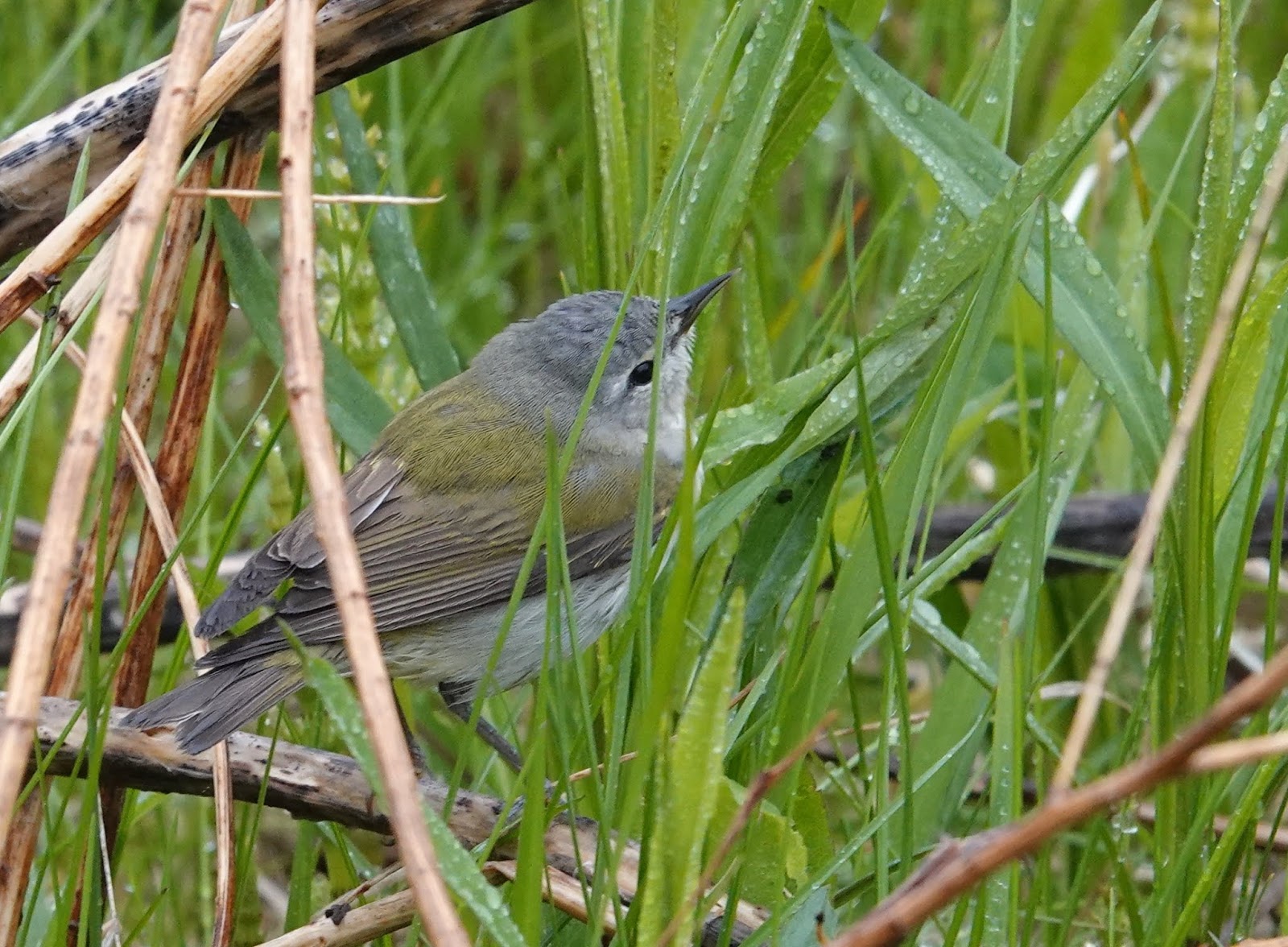
Tennessee Warbler (male)

Black-throateds

Black-throated Green Warbler and Black-throated Blue Warbler were two of the commonest warblers.


Saturday, 1 June 2019

Humbugs

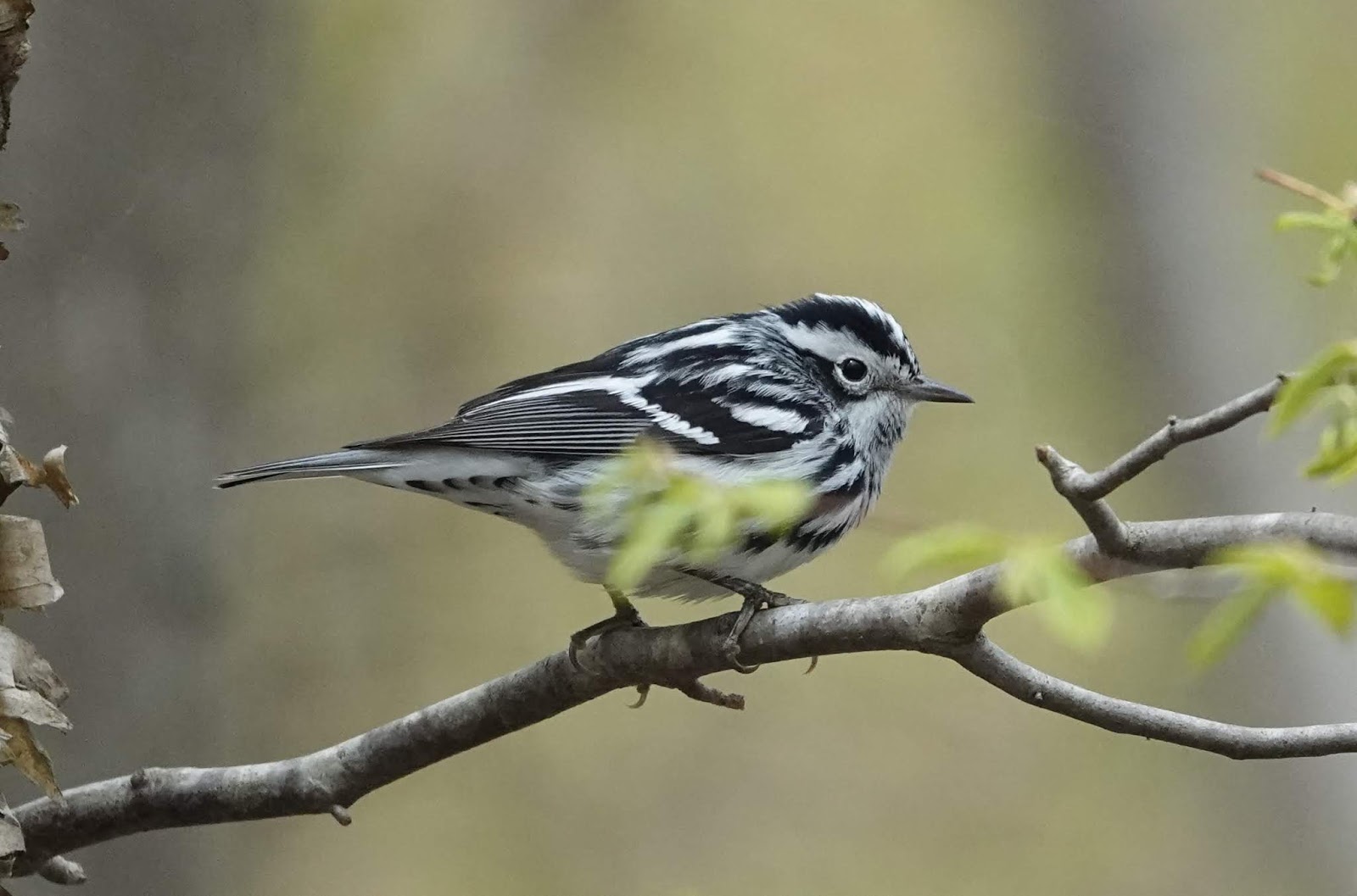
Another crowd pleaser, Black and White Warblers, were common and seen daily. There’s something mesmerising about they way they move up trunks and long branches. Somehow I never got around to taking many photos. Next time.


https://drive.google.com/uc?export=view&id=1xKVhVKX2yyRC2v8laf5NbPPr-OXT9LAJ
https://drive.google.com/uc?export=view&id=17yBl9wpWPJXPfICJXpDdhe_foNiOZXt6
One from JP -
https://drive.google.com/uc?export=view&id=1k-gluQpobfAvIFblbus202f4wjWI7i7L

Friday, 31 May 2019

Blackburnian Warbler

Staggering birds, probably the ultimate North American warbler. Despite being quite common it’s impossible to tire of them. Seeing three males togetherin a small pine was memorable, as was one on the beach and another glowing against the black water of a woodland pool. I only saw a couple of females. A male bathing in a bird bath was the last bird I looked at before we left - perfect.
https://drive.google.com/uc?export=view&id=1XlNd6kNlWsgBGyofMxPZ0iEU7EHECbCW
https://drive.google.com/uc?export=view&id=1aZGkRKEBbWHb2XXvQKs_pnK7nq-IsQH2
https://drive.google.com/uc?export=view&id=1KURSnud6BFRCuHb6KckYcpP16gpYqg07
https://drive.google.com/uc?export=view&id=16reWOECGFLTjJmT2rc3tZDJ6ik7zHjlx
And one of JPs many stunning shots - https://drive.google.com/uc?export=view&id=1Wpr8HZZtamtVIADmg_dfxIQbICUkWbvL

Canada Warbler

We were just ahead of the main push of Canada’s, so I only saw four. Thankfully one of them wasparticularly showy. This one was always a favourite, and was ultimately responsible for my change of heart over twitching Ireland in 2006.
https://drive.google.com/uc?export=view&id=1iap4VK14S6tloqKoSEENZiBMtyxisNsm
https://drive.google.com/uc?export=view&id=17xvBGQPS0vPN02fE4em5Pu1l0D_G8HgL
https://drive.google.com/uc?export=view&id=1yfmL2o8Ue0A71ll_Z4t0SOP9yOpaCt_o
https://drive.google.com/uc?export=view&id=1RSUhyWqEd09a752fMnCLvhXrKz55U7Hp

Saturday, 25 May 2019

Cape May Warbler

A personal favourite through association, it’s name instantly inspires nostalgia for the halcyon days of my time in that New Jersey paradise. The species’ status for me was elevated even further by the superb Shetland twitch in 2013. Despite that, my memories of males were all of a slightly underwhelming bird when compared to its congeners. How wrong I was, males were breathtaking, if rather variable, and the females were subtly pleasing. Even more surprising was just how common they were at Long Point, with multiple birds seen daily and five males in a single tree at one point. The first British record was of a singingmale in Paisley in 1975, what a sight that must have been. I remember reading about it when I was probably in my teens, never would I have expected to have had so many excellent encounterswith this species, and on both sides of the Atlantic. Birds, eh?

https://drive.google.com/uc?export=view&id=1xkL3RcM-SSry1iVMrrFUqfKmNi3SAj6F
https://drive.google.com/uc?export=view&id=1ud3gXPXT5lvxZ8TK9TFIthoFxFvH_MYi
https://drive.google.com/uc?export=view&id=1LdYq1FlpTjBHlIM2eBzQFZZnimU4vcZe
https://drive.google.com/uc?export=view&id=1k3MpulFOCAacIG3v3vfpEd97KNPrsXC-
https://drive.google.com/uc?export=view&id=1xB-hWgdbY6OTwQOmd00jtSHTy8lEjV2h
https://drive.google.com/uc?export=view&id=1VoDQe41GVlPNigCPjyxKqzjHG8f2-nxT