Saturday, 28 September 2019

Eastern Yellow Wagtail, Cemlyn, Anglesey

Splits and lumps have dominated the listing scene for a good few years now, with ever more emphasis on test-tube ticking. In early 2018 the BOU announced they could no longer be bothered to play the endless taxonomy shirade alone, and so had adopted the IOC taxonomy and the number of splits grew yet again. That may be good if you're interesting in your listing total (I am!), but less good from a field ID/birding perspective. Just like the Fylde wheatear a few weeks ago, the DNA style of ID is less rewarding, but part of me has grown to enjoy it, or at least some of it. So when news of a possible Eastern Yellow Wagtail on Anglesey came through in the evening of Wednesday 25th September, most people were probably underwhelmed. I was very interested - partly because I am an unapologetic filthy tick whore, but also because it was close to home and I had also missed a couple before (albeit only half-hearted efforts). There are just ten accepted records so far, but that is down to the recently split status and difficulty of confirming the ID fully. Let's face it, it's really not that rare.
Of the many recent splits, at least EYW is a relatively distinctive looking bird and identity can be confirmed via sonogram, so a test tube confirmation isn't required.

News of the birds' continued presence on Thursday 26th led to me, Malc Curtin, Al Orton and Phil Woollen teaming-up for the short drive over to Cemlyn late in the afternoon. There were perhaps 15 others there, although the web chatter highlighted much wider interest; I suspect most were understandably awaiting confirmation by sonogram and Anglesey is a long journey for many. Conditions were quite grim, in a strong wind under a grey sky, and the bird had steadfastly remained in a difficult to view area, but after around an hour the EASTERN YELLOW WAGTAIL decided to help us out and sat on a fencepost for a couple of minutes. Views were decent, but not good enough to see the elongated hind claw and we certainly didn't hear it call. Shame as I'd have liked to have nailed it properly, but you take what you can get. Thankfully others did make the crucial voice recording, enabling sonogram confirmation of the ID within a few days. 544 I think. Job done, and saves me a longer trip to a remote location where these things are more regular. North Wales, and Anglesey in particular, scores yet another great bird.

I didn't manage any photos, so here's a few shameless web poaches:


The above two photos were those initially broadcast on local Whatsapp groups that raised interest. Taken by the finders (Jayne and Lol, but I don't know their surnames - sorry!). This bird is yet another which may have slipped by without the aid of the internet! the monochrome plumage, pale bill base, facial pattern and strikingly long hind-claw all pointed to EYW, but are insufficient to nail the ID fully. 
Mark Rayment's excellent image.
Not much else to see, aside from a Little Owl, a few Curlew and Red-breasted Mergansers. The long staying rosy starling was about but I didn't manage to see it. 

I rather like a twitch when I'm home in time for tea :)


Friday, 20 September 2019

AGPs

I have no idea when I last saw an AMERICAN GOLDEN PLOVER, but it's been years. Two have been present at Lunt Meadows, just up the road in South Lancashire, for the last few days, so I made the short trip  over a sunny Friday as it neatly tied in with a work commitment. This was my first visit to the area since we were working on the adjacent ill-fated Lower Alt wind farm some years ago, at which time work on the reserve had just begun. It's since matured into a fantastic wetland, the sort of place I'd love as a patch.

The two AGPs were immediately on view on the Pump House Pool, and very lovely they were too. A couple of Ruff were also present amongst the perhaps 2,000 Lapwing. We were short of time so only stayed half an hour or so, but I'd like to wander around the reserve at a more leisurely pace soon.


Wednesday, 11 September 2019

Late to the Oenanthe Party

With the Brown Booby dominating recent birding activity, along with a busy schedule in my new life, I wasn't overly pleased to hear of a presumed 'Eastern' Black-eared Wheatear by Fluke Hall on the southern edge of Morecambe Bay in the Fylde. The bird was found by my old pals Paul Ellis and Paul Slade on 1st September, whilst I was dipping the booby in Cornwall. It is one hell of a find so credit to them, and it is an unusually early date for a rare wheatear. Autumn female wheatear species are notoriously tricky to identify and taxonomy is complicated, so it did seem odd than an ID was offered so quickly.

Eastern and Western Black-eareds are currently treated as conspecific, but recently published research indicates they are different species and has led to an IOC split recommendation. I've seen a single Western, way back in 1993, and several Pieds, but EBEW is a difficult bird to connect with for us northerners; most tend to be one day males in the SW. If it was a confirmed EBEW then it was a useful piece of armchair insurance for listing purposes. However female Pied Wheatears can be inseparable from EBEW, and a large hybrid zone apparently exists too. Sure enough, doubts were raised and the status of the Fylde bird was downgraded to Pied or EBEW, with most people leaning towards the former. Given my time restrictions I left it at that and assumed a definitive ID was not possible in this case, although it continued to gnaw away at me. It was only an hour away, surely worth seeing for insurance purposes, as well as being an interesting bird. Luckily for me the bird lingered, so I finally cracked on Monday 9th September, but amazingly dipped this supposedly nailed-on individual. It was seen again after I left, so must have disappeared further along the seawall. Never mind, it was surely a Pied....

Scroll forward just over 24 hours to late evening on Tuesday 10th. Finder Paul Ellis sent me a simple and clear message - it's an EBEW. It later transpired that the ever impressive Chris Batty had persisted with images and identified a pale spot at the base of mantle feathers that is apparently diagnostic of EBEW, and only visible on a few magnified photos. This level of forensic ID is way beyond my capabilities and hats-off to Chris for even attempting. Whether this is sufficient to persuade the BBRC is to be established, but I would expect so. Seeing the bird became more pressing and so I awaited news the next morning. Traditionally birds which are very rare and identified late almost always disappear as soon as confirmation is broadcast, so I was fully expecting negative news. Thankfully I was wrong, so made a second trip to Fluke Hall late in the day and this time success was immediate. I spent an hour or so with the bird and catching up with Paul Ellis, and very pleasant it all was too.

So, an apparent EASTERN BLACK-EARED WHEATEAR is in the insurance bag, although awaiting official IOC split and also BBRC acceptance.

Update January 2020: IOC has now announced the split, so pending acceptance of identity for this individual EBEW makes the grade and I'm glad I went (twice!). DNA results from this bird have also just been made public, but can only confirm the bird is not a Western BEW (perhaps as expected given genetic similarity with Pied wheatear). Seems like a case of watch this space for wheatears, I doubt this is the end of the splitting and lumping merry go round.


Thursday, 5 September 2019

Fairly Booby-licious

This year has not really been about birding, in fact I've barely raised my bins since Canada aside from the odd stroll around the patch. Family and personal life have taken front of stage and are likely to for some time. But as ever I remain a keyboard birder and - as was always going to be the case - something rare was going to turn up sooner or later to wake me from my avian slumber.

News of a probable Brown Booby off North Kent on 19th August barely registered; whilst the photographs looked interesting it was never going to be available. After the recent upsurge in North European records of this tropical sulid it was almost expected. Scroll forward 10 days to 29th and there was another report, this time off St Ives and hanging around just offshore. Still it seemed implausible and I was about to head to a work conference in Scotland, so I paid little attention initially. Then it was seen the next day, albeit briefly, by a number of birders and so the game of cat and mouse began. At one stage it appeared to have departed to northern France as one was photographed there, only for the photos to show an adult and so a different bird (the Cornish one being a 2nd year). Work and family commitments prevented my usual rapid scramble, although may also have saved me from the pain of multiple dips suffered by others. It was Sunday 1st September before I was able to get down, and even then on a time limit. Initial optimism and enthusiastic opinions on distant birds soon evaporated, it was not to be. Despite that it was a pleasant morning catching up with friends in a stunning location, and the passage of Manx Shearwaters and single Arctic Skua and Grey Phalarope provided some entertainment (the speeding ticket was less welcome). I headed back empty handed to my brothers' in the Cotswolds to re-join the family on my mum's birthday. Others stayed down there and part of me was a apprehensive that I couldn't do the same - surely it would be seen again?
 
The next day something truly remarkable happened. A brown booby was found at Kynance Cove on the Lizard, on the opposite side of Cornwall. Those who'd stayed naturally rushed down, only to discover this was another different bird (a 1st year). This bird, unlike the others, proved to be obliging over the next 5 days and so, finally on Thursday 5th September I made it down there (from a starting point of Glasgow with Andy C, now known as the erratic twitcher extraordinaire). The 1st summer BROWN BOOBY showed pretty much immediately, and put in a couple of good fly-arounds through the bay. Relief, although I won't pretend it was the most stunning bird I've ever seen.

Other birds were limited to a family party of Cornish Choughs, always a pleasure to watch, and a few commoner seabirds. A very stunning location more than compensated though, what a place!

Kynance Cove, Cornwall. A candidate location for the most scenic twitch of all time.
  
Brown Booby, Kynance Cove, Cornwall, September 2019. All images by Lee Fuller
 
 
A family party of Choughs. The species has been successfully reintroduced into county, but strangely wild birds or Irish origin appeared around the same time. 
The homeward journey was uneventful, if long, and I was back for 6pm to collect the kids. Madness. 


Thursday, 1 August 2019

Godwit Summer

Whilst work may be birding related, it is rare that I do anything I would consider as birding for work. For once, though, we were contracted to do something different - monitor the breeding success of Black-tailed Godwits at on the River Ribble in Lancashire. Seen as everyone at work was already busy, I took it upon myself to get involved and visited every couple of days for a few weeks in May and June 2019.
Two sub-species of black-tailed godwits regularly occur in the UK: L.limosa and L.l.islandica. The limosa subspecies breeds on the Ribble and a handful of other sites in England, with the majority of the UK population in the Cambridgeshire Fens. The breeding population is approximately 60 pairs annually, and it is therefore one of the rarest breeding birds in the country. Considerable conservation measures are on-going to safeguard the species and its breeding habitats in the Fens, including habitat creation and a ‘head-starting’ breeding programme (using artificial incubation and protecting the chicks during the rearing period so as to increase breeding productivity and boost numbers).
The Icelandic islandica subspecies also occurs regularly in the UK, with large numbers using estuaries and wetlands around the country throughout the year. A smaller number of the islandica subspecies also breed annually in Orkney and Shetland.
Godwits were first recorded breeding on the Ribble in 1984 and have attempted most years since. Typically just one pair is present, but in some years two pairs attempt, and this is the sole location in the north of England. Breeding success is sporadic, so the tiny population is highly vulnerable.
Two pairs attempted to nest in 2019. An additional (unpaired) bird was also present throughout the breeding season, and it was a real pleasure to observe them.
Small numbers of non-breeding islandica birds were also regularly present, using the central drainage ditch to feed and roost. Interaction between the breeding and non-breeding birds was never noted.
'Pair A’ had two chicks, first seen by Paul Ellis on 25th May and with the last observation on 18th June. The sudden disappearance of the birds, with the adults being seen subsequently in distressed state, strongly suggests that the chicks perished at around 25 days old. At this age the chicks were probably within no more than a week of fledging (flight capability) and therefore relatively large. A real shame, we were almost there!
‘Pair B’ had a single chick, which I first observed on 29th May, and it was clearly smaller than the Pair A chicks (therefore younger). This chick was last observed on 1st June and was presumably predated. The pair lingered around the marsh for a few days after the chick disappeared. 

A single (unpaired) bird was present throughout. It was assumed to be a male by a combination of behaviour (regular display flights) and plumage (pale faced). It regularly showed aggression towards predators and also Pair A and Pair B.
It's rare I get the opportunity to watch bird behaviour like this and it was a thoroughly enjoyable summer in that respect, despite the sad outcome. It was a real privilege and for once I spent some time away from the desk. I had not previously realised how structurally distinct Limosa birds are, and as ever once I started watching them I realised how little I knew about the species. 
As well as the godwits, the marsh supported breeding Shoveler, Avocet, Little Ringed Plovers and good populations of Lapwing and Redshanks. A great place to linger, although a prolonged period of heavy rain in June seemed to decimate populations of all waders.
Predation is the major issue though, mainly down to poor landscape management which has included planting of trees and hedgerows which in turn support breeding buzzards and crows.


Saturday, 8 June 2019

And and the rest....warblers

This is getting too much, I'll just post some nice pretty photos....

Male Yellow-rumped (Myrtle) Warbler (male)
Common Yellothroat (male)
Magnolia Warbler (male)
Wilson's Warbler (male)

Hooded Warbler (male)

Parula (female)

Prothonotory  Warbler (male)
Palm Warbler

Chestnut-sided Warbler (male)

Northern Waterthrush

Parula (male)

American Redstart (male)

Magnolia Warbler (male)

Yellow-rumped Warbler (male)


Pine Warbler (male)


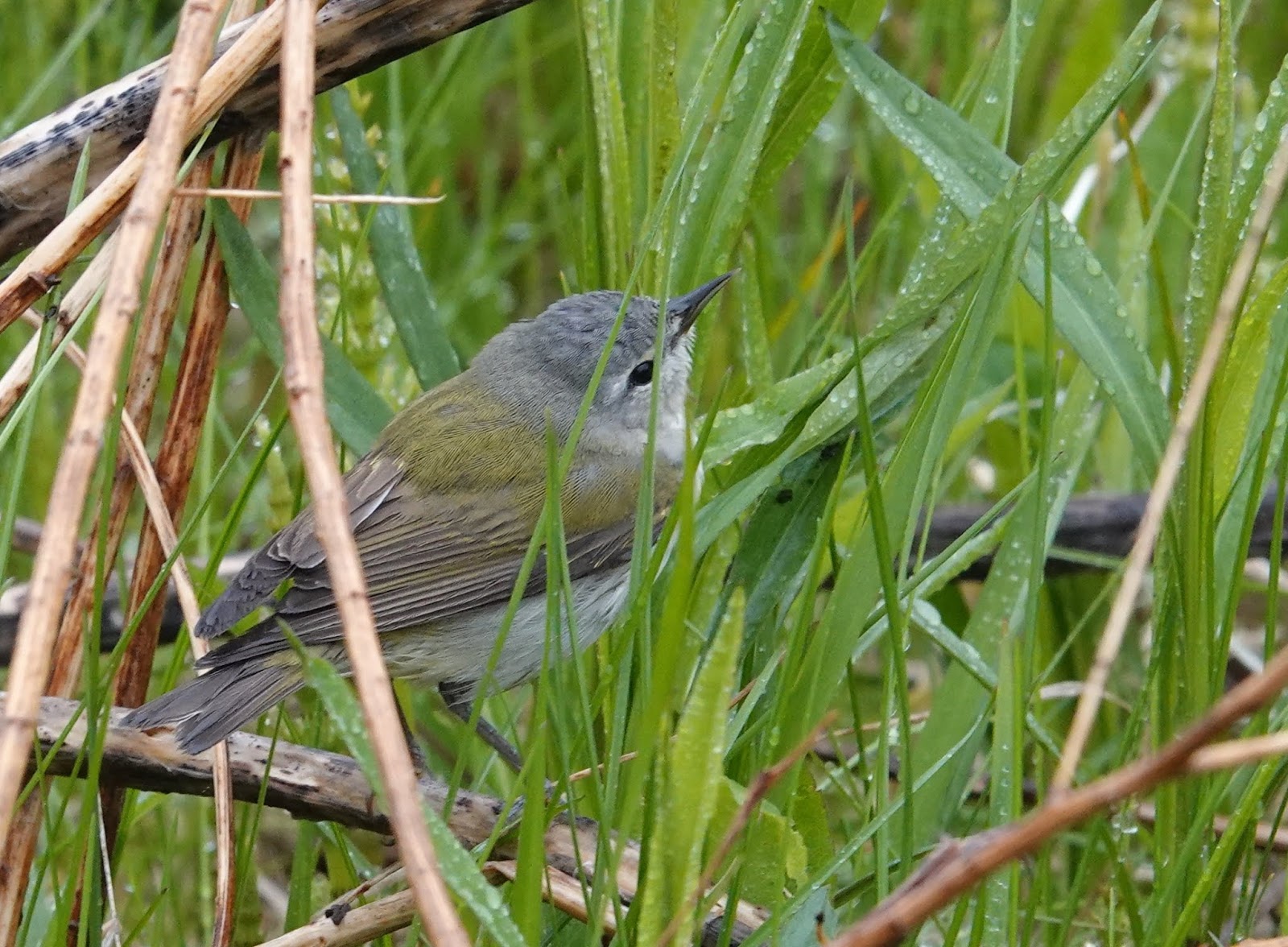
Tennessee Warbler (male)

Black-throateds

Black-throated Green Warbler and Black-throated Blue Warbler were two of the commonest warblers.